SentrySafe vs First Alert Safe: Which Is Better? (October 2026)
Choose the SentrySafe SFW123DSB for more capacity and defined water protection details; choose the First Alert 2087F if its smaller capacity better fits your storage needs. Both safes have a stated 1-hour fire rating at 1700°F.
On this page (6 sections)
The SentrySafe SFW123DSB offers more capacity and defined water protection; the First Alert 2087F has a smaller capacity for storage needs that suit it. In this SentrySafe vs First Alert comparison, both safes have a stated 1-hour fire rating at 1700°F.
The SentrySafe holds 1.23 cubic feet, while the First Alert holds 0.94 cubic feet. Their stated fire ratings share the same time and temperature, but the water protection details differ.

SentrySafe vs First Alert: which fire rating is stronger?
Both models have a stated fire rating of 1 hour at 1700°F. The SentrySafe is UL Classified for this rating, and the First Alert is UL listed.
Those ratings do not tell you every condition a safe can withstand. Check the model's instructions and certification details if a particular document or media format matters to your choice.
SentrySafe says the SFW123DSB is ETL Verified to withstand a 15-foot fall during a fire and remain closed. This is an additional stated feature for this model.
For a plain explanation of fire ratings and certification terms, see how fireproof safe ratings work. Capacity, water exposure and placement also matter.
Does either safe protect against water?
The SentrySafe has a defined water protection claim: it is ETL Verified for 24 hours in water up to 8 inches deep. The First Alert is described as waterproof, but its protection duration and depth are unspecified.
If flooding is a key concern, that difference may decide the comparison. Read what fire and water resistance claims mean and consider the water exposure possible at your home.
Neither model's water protection description covers every flood condition. Think about where water could enter, how high it might rise and whether the safe would sit on the floor.
How much storage do the two safes offer?
The SentrySafe offers 0.29 cubic feet more capacity. That extra room may help if you want to store documents, valuables and small media together.
The SentrySafe has a 1.23 cubic foot capacity. Its interior measures 12.6 inches wide, 11.9 inches deep and 13.8 inches high.
The First Alert holds 0.94 cubic feet. Its interior depth is 14.5 inches, but the other interior dimensions are unspecified.
Measure the folders, envelopes and objects you plan to store. For paper records, our document safe guide can help you think through capacity and document fit.
Which dimensions should you measure?
The SentrySafe exterior measures 16.3 inches wide, 19.3 inches deep and 17.8 inches high. The First Alert measures 19 inches wide, 14.5 inches deep and 16.5 inches high.
The SentrySafe is narrower but deeper and taller; the First Alert is wider but shallower and shorter. Measure the intended space in all 3 directions, then allow room to open the door and reach inside.
The SentrySafe weighs 86.3 pounds, and the First Alert weighs 76.3 pounds. Plan the delivery path and final position before either safe arrives.
Which lock and access features fit your routine?
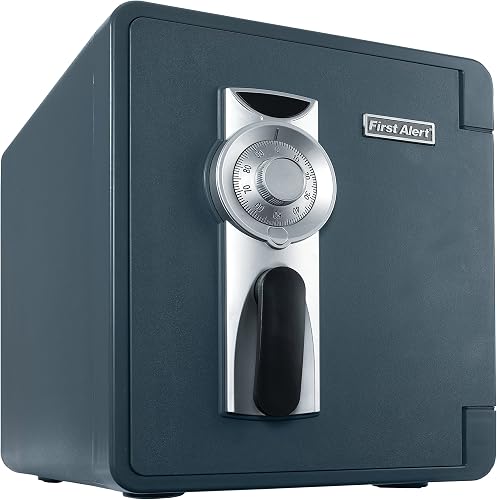
Choose based on the combination style and access method you prefer. The SentrySafe has a dial combination lock, while the First Alert has a combination lock and an emergency override key.
The First Alert has a 4-number combination lock and 1 emergency override key. The SentrySafe is a dial combination safe.
Both require you to keep the combination available and secure. Store any override key separately from the safe, but somewhere you can reach it if needed.
The SentrySafe has 4 live-locking bolts, steel construction, a pry-resistant hinge bar and bolt-down hardware. The First Alert has 4 live door bolts, concealed pry-resistant hinges and double construction.
These features describe different parts of each safe. Compare them against your priorities, and see our guide to keypad, dial and key safe locks for how common lock styles differ.
Which safe is easier to place at home?
The First Alert is shorter and shallower, while the SentrySafe is narrower and has more capacity. The right fit depends on your available space and the path to that spot.
The First Alert's exterior depth is 14.5 inches, compared with 19.3 inches for the SentrySafe. Its 19-inch width may still be too wide for a narrow opening.
The SentrySafe's 16.3-inch width may fit a tighter opening, but check its depth and height too. Measure the space to see whether it will fit under a counter or inside a cabinet.
Both safes are heavy. Check doorways, turns and stairs, and arrange suitable help to move the safe into place.
Should you bolt the safe down?
The SentrySafe includes bolt-down hardware. The First Alert's product details do not specify whether mounting hardware is included.
If anchoring matters, confirm the First Alert's installation requirements before deciding. Follow the model's instructions and make sure the surface and location are suitable.
Which safe should you choose for papers and valuables?
Choose the SentrySafe for more room and defined water protection; choose the First Alert when its smaller capacity and shallower exterior suit your space. Their stated fire ratings are similar, so the decision rests mainly on fit and storage needs.
Pick the SentrySafe if you need 1.23 cubic feet, want a shelf and bolt-down hardware, or value the stated water depth and duration. Its interior measurements also make it easier to check whether a specific folder will fit.
Pick the First Alert if 0.94 cubic feet is enough and its shorter, shallower exterior fits your planned spot. It includes an emergency override key and an adjustable, removable shelf.
For more options for paper storage, compare our best fireproof document safes for home. If neither model fits your room or contents, use the First Alert fire safe guide and SentrySafe box guide to consider the broader ranges.
Sources and scope
We compared the models' stated dimensions, capacities, lock details and fire and water protection information. The certification and resistance details above are based on the product data supplied for these models.
- SentrySafe SFW123DSB product information
- First Alert 2087F product information
Pick SentrySafe when capacity and defined water limits matter most; pick First Alert when a shallower, shorter safe fits better. For another brand comparison, see SentrySafe vs DocSafe.
Frequently asked questions
Is SentrySafe or First Alert better for fire protection?
Both safes have a stated 1-hour rating at 1700°F. The SentrySafe is UL Classified for this rating, and the First Alert is described as UL listed.
The shared time and temperature do not cover every fire condition, so compare each model's instructions with your needs.
Which safe holds more documents?
The SentrySafe SFW123DSB holds 1.23 cubic feet, compared with 0.94 cubic feet for the First Alert 2087F. The SentrySafe's interior measures 12.6 x 11.9 x 13.8 inches.
Measure your folders and items against the usable interior before buying.
Is the First Alert 2087F waterproof?
The First Alert 2087F is described as waterproof, but its water protection duration and depth are unspecified. The SentrySafe is ETL Verified for 24 hours in water up to 8 inches deep.
Consider those stated limits when choosing a safe for an area at risk of flooding.
Do these safes need to be bolted down?
The SentrySafe includes bolt-down hardware, but the First Alert's available details do not specify bolt-down hardware. The SentrySafe weighs 86.3 pounds and the First Alert weighs 76.3 pounds.
Plan where the safe will sit and follow its installation instructions.