Fireproof Safe Ratings Explained: Hours, UL and ETL
Fireproof safe ratings describe results under specific test conditions. Compare the standard, temperature, duration, and protected contents, then choose a safe that fits what you need to store.
On this page (9 sections)
- What do fireproof safe ratings tell you?
- How do time and temperature affect fireproof safe ratings?
- How should you compare UL and ETL fireproof safe ratings?
- Do UL and ETL labels mean a safe is fireproof?
- How do you choose a rating for the contents you store?
- What should you compare beyond fireproof safe ratings?
- How do you set up and use a fire rated safe?
- What mistakes can lead to the wrong safe?
- Which fireproof safe ratings should guide your decision?
Fireproof safe ratings describe results under specific test conditions, not a guarantee that contents will survive every fire. Compare the standard, temperature, duration, and protected contents before choosing a safe.
A useful rating gives you details to compare. A fire claim for paper may not cover digital media.
Water resistance is a separate feature. Start with what you need to protect, then choose a safe whose stated claims and size fit that job.
What do fireproof safe ratings tell you?
Fireproof safe ratings tell you how a safe performed under a stated test. The full claim matters because a duration or temperature without its standard and protected contents can leave important questions unanswered.
For example, “1 hour at 1700°F” gives a time and temperature. A general “fire resistant” claim does not give the same level of detail.
A fire rating is also different from a security rating. Lock type, resistance to forced entry, water protection, and installation are separate features to weigh against your needs.
How do time and temperature affect fireproof safe ratings?
Time and temperature describe the exposure used in a particular test. A longer duration may sound more protective, but compare it with other ratings only when their standards and protected contents are clear.
Test conditions do not predict the temperature inside a safe in every house fire. The result depends on the test method, the fire, the safe’s placement, and the items stored inside.
If you are deciding whether a longer duration is worth prioritizing, read whether you need a 2-hour fireproof safe. Choose based on the contents and risks that matter to you, not the largest number on a label.
How should you compare UL and ETL fireproof safe ratings?
Compare the claim each mark covers, because UL and ETL can refer to different evaluations. A fire classification and a water verification address separate hazards.
Read the standard, duration, temperature, and protected contents alongside the mark. Terms such as “compliant” and “tested” also need context; they do not necessarily mean the same thing as a third-party classification or verification.
What do UL and ETL fireproof safe ratings show?
The mark helps only when you know what claim it supports. A fire rating and a water submersion claim require separate checks.
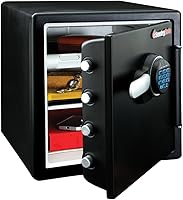
The SentrySafe CHW30300 has a UL fire endurance classification for 30 minutes at 1550°F and ETL water submersion verification up to 72 hours. Those claims concern different conditions.
The Amazon Basics safe has a modified UL 72 fire test for 20 minutes at 1200°F, tested by Intertek. It is not water resistant, so it suits buyers focused on document storage and fire protection who do not need a water claim.
Do UL and ETL labels mean a safe is fireproof?
A UL or ETL label does not mean a safe will protect contents in every possible fire. It identifies a specific evaluation or claim, so use the test details to judge whether it suits your storage needs.
“Fireproof” is common shorthand for household safes, but protection has limits. Heat, exposure time, installation, and the type of contents can all affect the outcome.
For a fuller look at realistic expectations, see whether fireproof safes work in a house fire. The fireproof home safe guide connects ratings with size and household use.
How do you choose a rating for the contents you store?
Choose a rating by matching its stated protection to the items you plan to store. Paper records and digital media may need different protection, so do not assume a document rating covers drives and other media.
For A4 papers and small valuables, the SentrySafe CHW30300 offers a 0.36 cu ft interior, a 30-minute, 1550°F UL fire endurance classification, and ETL water submersion verification up to 72 hours. It suits someone with a modest amount of paper who wants a compact box and a stated water claim; skip it if you need room for larger files or many items.
For mixed documents and valuables, the SentrySafe SFW123EU has a 1.23 cu ft capacity, a 1-hour, 1700°F UL classification, and a shelf and door pocket. It is a stronger fit when organization and a programmable keypad matter; its 87 lb weight makes it less convenient to move after setup.
The safe’s claim should cover the kind of contents you plan to protect. Keep backup copies of important digital files in a separate location when possible.
What should you compare beyond fireproof safe ratings?
Compare capacity, access, installation, and water protection alongside the fire claim. These details help you decide whether a safe will fit your space and routine.
The Amazon Basics safe gives you 1.24 cu ft of capacity, an adjustable shelf, a programmable keypad, and a backup key. It suits a buyer organizing documents and valuables in one place who wants a clearly stated fire test; skip it if you need water resistance.
The Mitlvge safe offers 4 cu ft of capacity, three removable shelves, a keypad, backup keys, an external battery box, and a stated 35-minute, 1700°F fire claim. Its large interior suits buyers with more belongings and flexible shelf needs, but skip it if you want a claim that is easier to compare directly with a named classification and detailed test conditions.
Measure the safe’s intended location and the items that need to fit inside. Confirm how it opens and installs, and read any instructions about water protection or the items you plan to store.
How do you set up and use a fire rated safe?
Set up a safe where its weight, access, and installation method work for your home. Follow the manual for anchoring, lock setup, batteries, and any steps needed to preserve its stated protection.
Keep backup keys or emergency access tools outside the safe. If you use a digital lock, choose a code you can recall and store it securely; avoid putting a written copy inside the safe.
Organize contents so papers lie flat and shelves do not block access to items you may need quickly. Keep digital media in the area or container recommended by the safe maker, and do not assume a fire rating for paper applies to it.
What mistakes can lead to the wrong safe?
Choosing by duration alone is a common mistake. A longer claim is not automatically the best match if its test conditions, protected contents, or water protection do not suit your needs.
Another mistake is treating “fireproof,” “waterproof,” and “theft resistant” as interchangeable. Check each claim separately, then make sure the safe’s capacity and installation fit your actual storage plan.
Finally, do not overlook daily access. A large safe can be awkward in a tight space, while a compact box may not hold folders or valuables you expect to add later.
Which fireproof safe ratings should guide your decision?
Choose the rating with clear test details that matches the contents you need to protect. For paper and valuables in one organized home safe, the SentrySafe SFW123EU combines a stated 1-hour, 1700°F UL classification with a shelf and door pocket.
Pick the CHW30300 if your priority is a compact box for A4 papers and small valuables with separate fire and water claims. The Amazon Basics safe fits organized storage with a stated modified UL 72 test, while the Mitlvge option offers more space and removable shelves for larger storage needs.
For more guidance on fire and water resistant safes, compare each claim separately before buying. The right fireproof safe ratings are the ones you can understand and match to your contents, space, and access needs.
Frequently asked questions
What does a 1-hour fireproof safe rating mean?
A 1-hour rating describes a safe’s performance during a stated fire exposure lasting 1 hour under specified conditions. It does not promise that every item will survive every house fire.
Check the test temperature, standard, protected contents, and the safe maker’s instructions.
Is UL or ETL better for a fireproof safe?
Neither mark is automatically better. Its meaning depends on the claim it covers: a UL classification may identify fire endurance, while ETL verification may cover water resistance.
Compare the exact standard, test conditions, and protected contents instead of choosing by initials alone.
Does UL 72 mean a safe is fireproof?
UL 72 is a standard used to evaluate fire resistance for record protection equipment, with different classes and test conditions. A reference to UL 72 alone does not tell you the duration, temperature, or contents covered.
Look for those details and whether the safe is classified, tested, or described as compliant.
Can a fire rated safe protect hard drives and USB drives?
It depends on the safe’s stated protection and its limits for digital media. Paper and digital storage can have different heat and humidity limits, so do not assume a safe rated for documents also protects drives.
Check the maker’s guidance for the specific media you plan to store.