Safe Lock Types: Keypad, Dial or Key?
Keypad locks use a code, dial locks use a combination, and key locks use a physical key. Choose based on how often you need access, how you'll manage backup access and whether you can store a key securely.
On this page (7 sections)
Keypad locks use a code, dial locks use a combination, and key locks use a physical key. The right choice among types of safe locks depends on your access habits, backup plan and comfort with keeping a key or combination secure.
Think about who needs to open the safe and how often. Compare the lock separately from the safe's fire or water protection, which depends on the model and its stated rating.
What types of safe locks are common?
Common home safe locks include electronic keypads, mechanical dials and key locks. Some safes combine an electronic lock with a secondary key, so check the exact model before choosing.
| Lock type | How you open it | Main choice to consider |
|---|---|---|
| Electronic keypad | Enter a code | Battery care and any backup access |
| Mechanical dial | Turn a dial through a combination | Whether you can use the dialing sequence reliably |
| Key lock | Insert and turn a key | Where you will keep the key |
| Keypad with secondary key | Enter a code, with a key as backup | How you will secure and manage both methods |
These are access methods, not security ratings. A lock type alone does not tell you how resistant the safe is to fire, water or forced entry.
Is a keypad safe lock right for you?
A keypad can suit you if you want to enter a code for frequent access and can manage its power needs. It avoids the need to keep a key handy, though some models include a secondary key for backup.
Choose a code you can recall without writing it somewhere obvious. If several people need access, decide who may know the code and how you'll update it if that changes.
A keypad safe depends on batteries. Check the manual for battery type and replacement guidance, then keep a supply available.
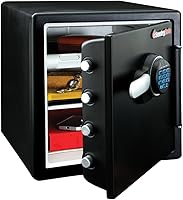
The SentrySafe SFW123GDC has a digital keypad and secondary locking key. SentrySafe recommends four high-quality, name-brand alkaline AAA batteries for it.
The SentrySafe SF123ES has a customizable keypad combination. Its listed features include a shelf and door pocket for organizing items inside.
Consider a keypad if you open the safe often and can maintain its power supply. If you prefer a lock that does not rely on keypad batteries, compare a dial model.
For more keypad options, see our best digital safes with keypad locks.
Does a dial lock work better than a keypad?
A dial lock may suit you if you want combination access without keypad batteries. You'll need to turn the dial in the correct sequence, so consider whether that routine feels manageable for everyone who needs access.
The SentrySafe SFW123DSB is a dial combination safe. Its features include four live-locking bolts, a pry-resistant hinge bar, a shelf and bolt-down hardware.
A combination can be shared with trusted household members, but it should not be left where others can find it. Store any written backup separately from the safe and limit who can access it.
Choose a dial when avoiding keypad battery upkeep matters more than entering a code. Check the instructions for setting and opening the combination so you know what the routine requires.
When does a key lock make sense?
A key lock can fit a document box you open occasionally and want to operate without a combination. It means you need a safe place to store the key.
The SentrySafe HD4100 File Box uses a key lock and includes two keys. Its interior is designed to fit hanging file folders, making it a document-focused option.
Keep the spare key in a secure place separate from the box. Avoid hiding it beside the safe or in a spot visitors could easily guess.
A key lock may be inconvenient if several people need access at different times. Decide who will hold the key and how another trusted person can reach it if needed.
What does a secondary key do on a keypad safe?
A secondary key provides another access method on some keypad models. It helps only if you know where the key is and how that model's backup method works.
The SentrySafe SFW123GDC pairs its digital combination with a secondary locking key. Confirm the backup procedure in the manual and store the key somewhere secure but reachable by the people who may need it.
A secondary key does not remove the need to manage the keypad's batteries. Treat the code, key and manual as separate parts of your access plan.
Before choosing a safe, ask:
- Who needs access, and how often?
- Can each person use the lock method correctly?
- Does the model have a backup access method?
- Where will you store a key or combination record?
- Can you follow the battery guidance if it uses a keypad?
Does lock type change a safe's fire rating?
No. A keypad, dial or key lock does not determine a safe's fire rating.
Compare the specific model's fire classification and test details instead.
For example, the SentrySafe SFW123GDC and SFW123DSB are each UL Classified to endure one hour at 1700°F. Those claims apply to those models and should not be assumed for every safe with the same lock type.
Our fireproof safe ratings explained guide covers how to read rating terms. For a broader look at capacity and placement, see the plain guide to fireproof home safes.
Water protection is also a separate feature. Compare each model's stated water protection details in our guide to fire and water resistant safes.
How should you choose between keypad, dial and key?
Choose the lock you can open reliably and manage safely over time. A keypad uses a code, a dial uses a combination, and a key lock uses a physical key.
Pick the SFW123GDC if you want a keypad with a secondary key, or the SFW123DSB if you prefer a dial combination. The HD4100 File Box suits paper storage with key access, while the SF123ES offers a customizable keypad combination, shelf and door pocket.
Read the model's access instructions and check its separate fire or water protection details before deciding. If you're choosing a safe overall, start with our fireproof home safe guide and match the size and rating to what you plan to store.
Frequently asked questions
Are keypad or dial safe locks better?
A keypad can be convenient for frequent access, while a dial lock works without keypad batteries. Neither is best for everyone.
Choose based on how often you open the safe, whether you can manage a backup method and which lock feels easier to use correctly.
Do electronic safe locks need batteries?
Electronic keypads need power, so check the safe's battery instructions and backup access method before relying on one. For the SentrySafe SFW123GDC, SentrySafe recommends four high-quality, name-brand alkaline AAA batteries with an expiration date 8 to 10 years from the current year.
Can a key safe lock be a good choice?
A key lock can suit a document box that you open occasionally and want to operate without a combination. Keep the key in a secure place separate from the safe, and consider who needs access if the key is lost or unavailable.
Does the lock type determine fire protection?
No. A lock describes how you open the safe.
Fire protection depends on the specific safe's construction and stated rating, so compare its fire rating and test details separately, as explained in our fireproof safe ratings guide.
What should I do if I forget a safe combination?
Use the recovery steps in the safe's manual and contact the manufacturer with the model information if needed. Before buying, check whether the safe has a secondary key or another supported access method, and store the instructions somewhere you can find them.