Fireproof Safe or Fireproof Bag: Which Fits Your Papers? (October 2026)
Choose a fireproof safe for papers stored at home, or a fireproof bag for a small set you may need to carry. A fireproof safe vs bag decision comes down to where your papers will stay, how much you need to store and the exact fire and water claims for each model.
On this page (10 sections)
- Fireproof safe vs bag: which fits papers kept at home?
- When is a fireproof bag the better choice?
- How do fireproof safe and bag claims compare?
- Which option holds the papers you need?
- Which is easier to move and access?
- How should you set up and care for a safe or bag?
- What mistakes should you avoid when choosing?
- Should you use both a safe and a bag?
- How do you make the fireproof safe vs bag decision?
- Which should you choose for your papers?
Choose a fireproof safe for papers stored at home, or a fireproof bag for a small set you may need to carry. In a fireproof safe vs bag comparison, weigh the protection claims alongside capacity, portability and access.
A safe gives papers a rigid container and, on some models, a specific fire classification. A bag takes less effort to carry, but the protection details vary and it doesn't replace a lockable safe.
For background on safe types, start with our plain guide to fireproof home safes. This comparison focuses on paper storage and which format fits your routine.


Fireproof safe vs bag: which fits papers kept at home?
A safe is the better fit for papers you keep in one home location. It can hold folders or a larger set of records, and some models include a lock and stated fire or water protection.
The SentrySafe HD4100 is a document box with a key lock and space for hanging folders. Its 0.65 cu ft capacity and fire classification of up to 30 minutes suit a focused collection of essential papers.
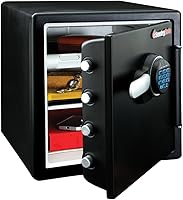
For more room and a longer stated fire classification, the SentrySafe SFW123DSB holds 1.23 cu ft and is UL classified for 1 hour at 1700°F. It is also ETL verified for 24 hours in water up to 8 in deep.
That extra space can help if you want documents beside cash, jewelry or small valuables. At 86.3 lb, this model needs a planned location and careful placement.
Compare sizes and ratings in our guide to fireproof safes for important papers. It can help you decide whether you need a document box or a larger home safe.
Which fireproof safe fits a home filing system?
Choose the HD4100 if hanging folders and a compact paper archive are the priority. Its interior measures 12 in wide, 8.1 in deep and 11.5 in high, and it is designed to fit hanging file folders.
The key lock keeps access straightforward, but you need to store the keys where authorized people can find them. The safe weighs 38.8 lb, so it is much easier to reposition than the heavier SFW123DSB, though it is still a rigid box to place.
Choose the SFW123DSB if you need more capacity and a longer stated fire classification. It has a dial combination lock, shelf, 4 live-locking bolts and bolt-down hardware.
A larger safe makes sense when it has a defined place and purpose. If your papers fit in a smaller box, the extra capacity and weight may add little value.
When does a safe's lock matter?
A lock matters when you want to limit access to stored papers. The HD4100 uses a key lock, while the SFW123DSB uses a dial combination lock.
Choose a lock you can open reliably, and decide how another trusted person could get access if you are away. A lock controls access; it does not describe how long a safe protects contents during a fire.
When is a fireproof bag the better choice?
A bag is the better fit when you want a small group of papers ready to carry. It can keep key records together for a go-bag, travel or a quick move between locations.
The SentrySafe Fire and Water Bag weighs 8 oz and measures 9 x 13 x 1.5 in. It closes with a zipper and snaps, and SentrySafe describes it as water resistant, not waterproof.
The Andyer Fireproof Document Bag measures 15 x 11 in and has 2 pockets for separating papers. Andyer describes its sealed zippers as waterproof and the bag as water resistant.
A flexible bag can fit in a drawer or inside a safe, but it doesn't provide a rigid shell. Pick one when easy carrying and grouping matter more than fixed, locked storage.
A bag may not suit a large household archive, binders or papers that need to remain sorted in folders. If you need a durable place for a full collection, consider a safe sized for those documents instead.
How do fireproof safe and bag claims compare?
Compare the exact fire and water claim for each model, because “fireproof” alone doesn't give you a useful limit. Check the classification, duration, temperature where stated, and any water depth or time.
The HD4100 is UL classified to withstand high temperatures for up to 30 minutes and ETL verified to protect contents during water exposure. The SFW123DSB is UL classified for 1 hour at 1700°F and ETL verified for 24 hours in water up to 8 in deep.
The bags have different claim language. SentrySafe describes its bag as intended for brief fire exposure and water resistant, while Andyer describes fire resistance and waterproof zippers.
These claims don't guarantee that papers will remain undamaged in every event. Conditions vary, so use the stated limits to compare models and choose a storage plan that fits your needs.
Our guide to fireproof safe ratings explains time limits and terms such as UL classified and ETL verified. For water claims, read how to compare fire and water resistance.
Is a water-resistant fireproof bag safe from flooding?
Water resistant does not mean waterproof. SentrySafe specifically describes its bag as not waterproof, so don't rely on it to protect papers from submersion.
Andyer describes its sealed zippers as waterproof, but doesn't state a water depth or duration for that claim. A flood can leave a bag exposed to water for longer than a brief splash, so consider the limits and where you will store it.
The SFW123DSB's water claim is more specific: 24 hours in water up to 8 in deep. Match that stated limit to the kind of exposure you want to prepare for.
Do bags and safes offer the same fire protection?
No, their claims are expressed differently, so compare each model on its own terms. The two SentrySafe safes have UL classifications with stated durations, while the bags are described as fire resistant or intended for brief fire exposure.
That difference matters if you want a specific time limit to guide your choice. Don't infer that a bag has a safe's classification, or that placing a bag inside a safe extends either item's stated protection.
Which option holds the papers you need?
Choose by the largest document or folder you plan to store, then check the interior measurements. A bag's flat shape and a safe's interior height serve different storage needs.
The HD4100 fits hanging folders and can help keep a home filing set visible and organized. The SFW123DSB has a wider and deeper interior, with more room for documents plus other valuables.
The SentrySafe bag is 9 x 13 x 1.5 in, while the Andyer bag is 15 x 11 in with 2 pockets. Both are for papers that fit within those dimensions, rather than thick files or binders.
Before you choose, gather the actual papers you want to protect and measure the largest folder or envelope. Leave room to close the safe or bag without bending documents or making routine access awkward.
A bag works best when its contents stay flat and the closure can shut fully. If you need to separate papers by person or purpose, the Andyer's two pockets offer a simple way to group them.
Which is easier to move and access?
A bag is easier to carry, while a safe suits papers that stay in one place. This difference matters most when you plan a go-bag or need to relocate the records.
The two bags weigh less than 1 lb each. The HD4100 weighs 38.8 lb, and the SFW123DSB weighs 86.3 lb.
Keep a bag where you can reach it without searching through stored belongings. Limit the contents to papers you would actually take, since a bag packed too full can slow you down.
A safe needs a planned location and access routine. Before filling a heavier model, decide where it will sit, who can open it and how you will retrieve the papers when needed.
For the safe, easy access is useful for ordinary household records, but a highly visible location may not suit every home. Pick a practical place that lets you use the safe without moving other heavy items each time.
How should you set up and care for a safe or bag?
Set up either option around a short, organized document list and a known access plan. A safe or bag works best when you can find the papers quickly and close the container properly.
For a safe, choose the location before loading it. Keep the key or combination information available to the people who may need the documents, and avoid packing the interior so tightly that folders become difficult to remove.
For a bag, sort papers into flat groups before placing them inside. Close both the zipper and snaps on the SentrySafe bag, or fully close the Andyer zippers, then store it where you can grab it quickly.
Review the contents after major life or household changes. Replace outdated copies, add records you now need, and make sure the bag still closes or the safe still has enough room.
Don't treat either container as a complete emergency plan. Know which records you need to take, where the container is, and who else can reach it.
What mistakes should you avoid when choosing?
The main mistake is choosing by the word “fireproof” alone. Protection claims, fit and access matter just as much as the label.
Don't assume water resistant means waterproof, or treat Andyer's zipper claim as a stated submersion limit. Don't assume a bag's brief fire exposure language matches a safe's timed classification.
Avoid buying a container before measuring your papers. A safe may have less usable room than its exterior size suggests, while a flat bag may not suit a thick folder or binder.
Finally, don't put every essential record in a bag you can't quickly reach, or in a heavy safe without an access plan. The right choice should fit how you store and retrieve documents in ordinary life.
Should you use both a safe and a bag?
Using both makes sense when you want a home archive and a separate set of papers ready to carry. Keep the small emergency group in the bag and the broader collection in the safe.
For example, a safe can hold insurance records, legal paperwork and folders, while a bag keeps passports and a few essential documents together. This approach reduces what you need to carry without making the safe your only document location.
Don't assume that a bag adds a particular number of minutes to a safe's rating. Each has its own protection claim, and putting them together does not create a new classification.
How do you make the fireproof safe vs bag decision?
Pick a safe for stationary papers, a bag for a portable set, or both when each has a separate job. Then check the model's protection details and the actual dimensions of your papers.
Choose the SentrySafe HD4100 file box if hanging folders and home filing matter most. If you need a larger safe with a longer stated fire classification, compare the SFW123DSB review and confirm the model before buying.
For a portable setup, the SentrySafe bag has a stated size and water-resistance limit, while the Andyer bag offers 2 pockets. If you want to compare more formats, see our guide to fireproof document safes.
Which should you choose for your papers?
Choose a fireproof safe for papers that stay at home, a fireproof bag for a small group you may carry, or both for separate storage jobs. Use the model's protection claim and your papers' measurements to make the final choice.
In a fireproof safe vs bag decision, start with where the papers need to be and how you will reach them. Our guide to whether fireproof safes work in a house fire explains why ratings and real conditions both matter.
Frequently asked questions
Is a fireproof safe better than a fireproof bag?
A safe is usually the better fit for papers that stay at home, especially if you want a rigid container and a stated fire classification. A bag suits a smaller set of records you may carry.
Compare the exact fire and water claims, since “fireproof” alone doesn't provide a time or water limit.
Can a fireproof bag replace a home safe?
A bag can keep a portable group of papers together, but it doesn't offer the same rigid storage or lock as a safe. Check its size, closures and protection claims.
Then decide whether it holds everything you need.
A bag may also fit inside a safe as an organizer.
Are fireproof document bags waterproof?
Not always. The SentrySafe Fire and Water Bag is water resistant, not waterproof, while Andyer describes its sealed zippers as waterproof.
Andyer doesn't state a water protection duration or depth, so don't assume the bag is suited to submersion.
What should go in a fireproof safe or bag?
Store papers you would need to replace or retrieve after an emergency, such as passports, birth certificates, insurance records and legal paperwork. Keep the set focused enough to fit without blocking access.
For bags, choose documents that fit flat and can be carried together.
Should I put a fireproof bag inside a safe?
You can use a bag to group papers inside a safe, as long as it fits without blocking the lid or other contents. The safe and bag have separate protection claims, so don't assume one extends the other's rating.
Keep the combination, key or access plan available to the people who need it.