How to Open a Fireproof Safe
To open a fireproof safe, use the method your lock was built for: keypad code, dial combination, or the override key. If the door won't budge after the lock releases, push the door in slightly and pull it toward you before turning the handle.
On this page (8 sections)
- How do you open a fireproof safe with a keypad?
- How do you open a fireproof safe with a dial?
- What do you do when the code or combination won't work?
- Why won't the door open after the lock releases?
- How do you open a fireproof safe when the keypad is dead?
- Which fireproof safe makes opening easy?
- How do you avoid getting locked out of a fireproof safe?
- When should you call a locksmith or the maker?
To open a fireproof safe, use the entry method your lock was built for: a keypad code, a dial combination, or the override key. If the lock releases but the door won't move, push the door in and pull it toward you before turning the handle.
Fireproof safes are heavy and seal tight on purpose, so a stiff door is normal. The steps below cover each lock type and the common reasons a safe won't open.
How do you open a fireproof safe with a keypad?
Enter your code, wait for the lock to click, then turn the handle. Most electronic fireproof safes run on batteries, so a dead keypad is the first thing to rule out.
Wake the keypad by pressing a button, then type your code within the time the lock allows. A light or beep confirms the code was accepted.
Turn the handle within a few seconds, because some locks relock automatically.
If nothing happens, press and hold the wake button for a moment before entering the code. Then try the override key.
A keypad that lights up but rejects every code usually means the code was changed, not that the safe is broken.
SentrySafe recommends four high-quality, name-brand alkaline AAA batteries with an expiration date 8 to 10 years out. Swap them before a long trip or a storm season, not after the keypad dies.
How do you open a fireproof safe with a dial?
Turn the dial through your combination in order, then turn the handle. Dial locks use a preset combination, so there's no code to program and no battery to replace.
Start by turning the dial several times in one direction to clear it. Then stop at each number in the combination in the order the manual gives.
The final turn usually needs a firm push past the last number to release the bolt.
Line the numbers up carefully at the index mark. A dial that spins freely without any resistance may be on the wrong turn count, so start the sequence again from the beginning.
The SentrySafe SFW123CU uses a preset dial combination for security without batteries. A dial safe is a good fit for a household that would rather not depend on a keypad.
What do you do when the code or combination won't work?
Check the code against your records before assuming the lock failed. Typos, a changed code, and weak batteries explain most failed openings.
Confirm you're entering the digits in the right order and not mistaking a 6 for an 8 on a worn keypad. Try the secondary key if your model has one.
For a dial, recheck the turn direction and the number of full spins before the first number.
If the safe came with a preset code, look in the owner's manual and the paperwork that shipped with it. Many owners change the code and forget to write the new one down.
When nothing works, contact the maker's support line with your model number and proof of purchase. A locksmith who works on safes can open it without drilling in many cases.
Drilling or prying the door yourself usually destroys the fire rating and the seal.
Why won't the door open after the lock releases?
The gasket and bolts can hold a fireproof door shut even when the lock is open. Push the door inward, turn the handle firmly, and pull straight toward the room.
Fireproof safes carry a thick intumescent seal that expands in heat, and that seal makes the door fit snug. A new safe can feel stiff for the first few openings.
After a humid stretch, the gasket may stick slightly to the frame.
Check that the safe sits level on its floor or mounting bolts. A cabinet that leans can bind the bolts against the frame.
If the handle turns but the door stays put, a bolt may be partly extended, so turn the handle fully before pulling.
Never force the handle with a bar or tool. That bends the linkage and turns a simple fix into a repair.
How much clearance does the door need?
A fireproof door swings on a heavy hinge and needs room to clear the frame before it will open. The SentrySafe SFW123GDC door requires 14.75 inches of clearance to fully open, so measure the space in front of the cabinet before you bolt it down.
A safe tucked into a closet with only a few inches to spare will feel stuck even when the lock has released. Leave the clearance the maker lists, and the door will swing without scraping the wall or the shelf beside it.
How do you open a fireproof safe when the keypad is dead?
Use the override key, then replace the batteries. Electronic fireproof safes include a key that bypasses the keypad so you aren't locked out when the power dies.
The keyhole usually hides behind a small cap or a panel on the keypad face. Pull the cap off, insert the key, and turn it while you press the handle.
The key releases the lock, but the door still needs the handle turned to swing open.
Keep the override key somewhere outside the safe and away from the cabinet. A key stored inside the safe defeats the purpose.
If the key is lost, the maker's support team can help with a replacement after you prove ownership.
Once the door is open, fit fresh batteries and test the code before you close it again. A keypad that works with the override key but not the code points to the batteries or the code itself.
Which fireproof safe makes opening easy?
The SentrySafe SFW123GDC is the easiest to live with for most people, because it pairs a backlit keypad with an override key. A dial safe suits anyone who wants no batteries, and the First Alert 2087F is a smaller option with a key override.
Each one opens the same way in principle: enter the code or combination, then turn the handle. The difference is what happens when the electronics or the code fail.
The keypad model depends on batteries; the dial models depend on remembering the combination.
The SFW123GDC adds a backlit keypad and interior light, so you can enter the code and find what you need in the dark. The SFW123CU has the same 1.23 cubic foot capacity and the same four live-locking bolts, but its dial never needs a battery.
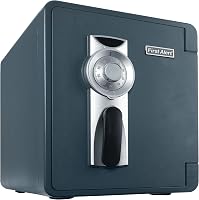
The First Alert 2087F holds 0.94 cubic feet and lists a four-number combination with an emergency override key. All three stand near 17 inches tall, so the door clearance and the lift onto the floor are similar.
For owners of the First Alert line, our guide to how to open a first alert safe walks through that brand's locks step by step. If you're still comparing models, see how the fireproof safe brands differ in lock design and door fit.
How do you avoid getting locked out of a fireproof safe?
Write the code down outside the safe, store the override key away from the cabinet, and test the lock on a schedule. Lockouts are almost always a records problem, not a hardware failure.
Keep a copy of the code in a password manager or a sealed envelope in a separate room. Note the date you set it.
If more than one person uses the safe, agree on one code instead of several half-remembered ones.
Replace keypad batteries before the expiration date the maker recommends. Test the lock every few months, including the handle turn and the door swing.
A stiff bolt or a fading keypad shows up in a test, not during a fire.
If the safe holds documents you might need in a hurry, keep the override key somewhere you can reach without a light. Store it away from the cabinet but in a spot you won't forget.
The First Alert fireproof safe models and the Honeywell fireproof safe line both use override keys on their electronic locks, so the same habits apply across brands.
When should you call a locksmith or the maker?
Call the maker first, then a safe locksmith if support can't help. Both routes keep the fire rating intact, which drilling does not.
Have your model number, serial number, and proof of purchase ready. Support can confirm the preset code and send a replacement key.
A locksmith who specializes in safes can often pick or manipulate the lock without damage.
Skip the drill and the pry bar. A hole in the door or the body breaks the seal that keeps the interior cool in a fire.
A safe opened that way still holds your papers, but it no longer protects them.
If the safe is under warranty, contact the maker before anyone touches the lock. A limited one-year warranty covers defects, and unauthorized opening can affect it.
The decision rule is simple: try the code, try the key, call support, then call a locksmith. Opening a fireproof safe is a records and sequence problem far more often than a broken lock.
Frequently asked questions
What do I do if I forget the combination to my fireproof safe?
Check the owner's manual and any registration paperwork first, since many safes ship with a preset code. If you can't find it, contact the maker's support line with your model number and proof of purchase.
Never drill or pry the door, because that destroys the fire rating.
Why does my safe open but the door still won't swing?
Fireproof safes use a thick door gasket that seals tight, and the bolts can drag on the frame after the lock releases. Push the door inward, turn the handle firmly, and pull straight toward you.
If it still sticks, check that the safe sits level and the hinges aren't binding.
How do I stop a fireproof safe from locking me out?
Keep a written copy of the code somewhere outside the safe, and store the override key away from the cabinet. Replace keypad batteries on a schedule so the code works when you need it.
Test the lock every few months so a stuck bolt shows up before an emergency.