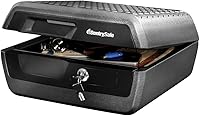
What to Keep in a Fireproof Safe Box
Keep the documents you can't replace quickly in a fireproof safe box: birth and marriage certificates, deeds, insurance policies, passports and a home inventory. Add small heirlooms and backup drives if the box is rated for them.
On this page (8 sections)
- What documents belong in a fireproof safe box?
- Which small valuables also fit in the box?
- What should you leave out of a fireproof safe box?
- How do fire ratings change what you can store?
- Which safe fits which kind of paperwork?
- What goes in a waterproof safe versus a fireproof one?
- How should you organize the contents?
- What else should you know before you fill the box?
What to keep in a fireproof safe box comes down to the papers you can't replace quickly. Store birth and marriage certificates, property deeds, insurance policies, passports, and a home inventory in the safe.
Add small heirlooms and backup drives when the box is rated for them. Everything else can go elsewhere.
The value of a safe depends on how well you sort your papers first.
What documents belong in a fireproof safe box?
The core set is the paperwork that takes weeks or lawyers to replace. A fireproof document safe earns its place when it protects those originals.
Start with identity and family records. Birth certificates, marriage licenses, adoption papers, and Social Security cards all fit in a folder and all cost real time to replace.
A 1.23 cubic foot interior holds several folders like this side by side, so each family member's papers can sit in their own labeled section rather than one mixed stack.
Then add property records: deeds, titles, mortgage papers, and lease agreements. Insurance policies belong here too, both home and life.
An interior about 12.6 inches wide and 11.9 inches deep takes standard letter folders without folding the papers in half.
A home inventory is the document people forget. A written or photographed list of your rooms makes an insurance claim far easier after a fire.
Keep copies of tax returns for the years you may need to prove income. Recent wills and powers of attorney go in as well.
Store each group in a labeled folder or envelope so you can grab what matters if you ever need to evacuate. A folder system also means the safe stays a filing cabinet you use, not a box you avoid opening.
Which small valuables also fit in the box?
Small valuables earn a spot when they are both hard to replace and easy to store. A safe holds them better than a bedroom drawer.
Think of family jewelry, old watches, and small heirlooms that matter more for memory than money. Add coins or stamp collections only if the safe's size suits them.
A locking drawer inside the keypad model gives these items their own spot, separate from the paper folders so they don't get crushed or misplaced.
Backup drives and USB sticks belong here only if the box is rated for digital media. Paper protection does not always extend to electronics.
The SFW123GDC pairs its fire rating with a 1.23 cubic foot body that leaves room for a drive or a stack of discs beside the folders.
Keep the collection small. Every extra item makes the safe harder to sort through when you actually need a document.
A door tray and pocket on the keypad model suit rings, spare keys, and loose IDs without adding bulk to the main shelf.
What should you leave out of a fireproof safe box?
Some things don't belong in a safe, either because another place protects them better or because the safe itself is wrong for them. Skip these.
Large cash sums are better in a bank. Medicines, batteries, and aerosol cans don't handle heat well, so keep them out.
Heat is the whole point of the fire rating, and items that react to it defeat the protection around them.
Irreplaceable art and bulky valuables won't fit anyway. Documents you need weekly, like a current passport before a trip, are easier in a drawer.
If you're weighing a home safe against the bank, our guide to safe deposit box alternatives walks through the split. A good middle path is originals in the safe, photocopies in a second location, and the few documents you truly can't lose in a bank box.
How do fire ratings change what you can store?
Fire ratings decide which contents the box actually protects. A safe rated for paper at 1 hour is not automatically safe for a hard drive.
The SentrySafe SFW123GDC and SFW123CU are UL Classified to endure 1 hour at 1700°F. SentrySafe ties that rating to documents, valuables, DVDs, and USBs.
Both models also carry ETL verification that they withstand a 15 foot fall during a fire and remain closed.
The HD4100 file box carries a 30-minute UL Classified rating. That is fine for paper in a small home office, but it leaves less margin.
The shorter window is why the file box suits everyday paperwork rather than a full archive of originals.
Match the contents to the rating before you buy. Digital media and a full document set call for the longer rating.
A drawer of passports and a deed will do fine in the 30-minute box as long as the safe sits where firefighters can reach it.
Which safe fits which kind of paperwork?
The right box depends on how much paper you keep and how you like to organize it. Three SentrySafe models cover most homes.
The SFW123GDC is the best fit for most households. Its 1.23 cubic foot interior takes a full family document set, and the keypad with a backup key is quick to open.
It is also ETL Verified for 24 hours in 8 inches of water. The digital keypad runs on four AAA batteries, and SentrySafe recommends name brand alkaline cells with an 8 to 10 year expiration date.
The safe bolts to the floor. At about 86.69 lb, plan on a second person to move it.
Best for everyday paperwork
The SentrySafe HD4100 File Box suits renters and anyone who sorts papers week by week. Its interior fits hanging file folders, so passports, insurance records, and legal papers stay visible.
A key lock with two keys keeps the lid shut. At about 39 lb it is light enough to carry, and the 30-minute fire rating covers quick home emergencies.
The 0.65 cubic foot interior is small, so it works as a first safe rather than a full archive. Built in straps help hold smaller items like passports and certificates in place so they don't slide under the folders.
Best for households that want no keypad
The SFW123CU Dial Safe uses the same 1.23 cubic foot steel body and 1-hour rating, but opens with a preset dial combination instead of a keypad. That means no batteries to replace.
The trade-off is a fixed combination you can't change. It carries the same 24-hour water rating as the top pick, and it can mount to the floor or wall.
Pick it if a keypad feels like one more thing to maintain. Both large models share steel construction, four live-locking bolts, and a pry-resistant hinge bar.
What goes in a waterproof safe versus a fireproof one?
Water and fire are different threats, and the best boxes handle both. Flooding from a burst pipe or a storm can reach a closet safe just as easily as flames.
Waterproof protection matters most for paper and photos. A safe ETL Verified for 24 hours in 8 inches of water gives you time to notice a leak.
Without that rating, a wet folder can turn to pulp before anyone spots the puddle.
The SFW123GDC and SFW123CU both carry that water rating. The HD4100 is also ETL Verified for water exposure, but its paper-focused design means you should keep folders flat.
If your home sits in a flood zone, a water and fireproof safe is the safer default. Compare the models in our roundup of fireproof document safes before choosing.
The water rating matters just as much as the fire rating when the safe sits in a basement or a ground-floor closet.
How should you organize the contents?
Organize by how often you need each paper. A safe you can sort in seconds is more useful in a hurry.
Use labeled folders: identity, property, insurance, and taxes. Keep the most urgent documents near the top.
An interior light on the keypad model helps when you are digging through folders in a dim closet.
Snap a photo of each document and store the copies in the cloud or with a relative. That way a lost key doesn't strand your paperwork.
Write down the combination and key location somewhere safe outside the box. Tell one trusted person where that note lives.
Review the safe once or twice a year. Replace expired policies, update the inventory after big buys, and pull out papers that no longer matter.
What else should you know before you fill the box?
Don't overfill the safe. A box packed tight is hard to open and leaves no room for the next document.
Bolt small safes down so a burglar can't carry them off. The SFW123GDC and SFW123CU both include bolt-down hardware.
The SFW123GDC also adds an anti-theft alarm to the mix.
Check the door clearance before you place the safe. The SFW123GDC needs 14.75 inches to open fully.
Measure the closet or floor spot first so the door can swing past the folders without hitting a wall.
For a first safe in a small home, the HD4100 file box is a solid choice. If you keep more than a folder's worth of papers, size up to the SFW123GDC.
The decision rule is simple. Pick the HD4100 if you want a portable file box for everyday papers.
Pick the SFW123GDC if you need room for a full document set and digital backups. Pick the SFW123CU if you'd rather skip batteries and use a dial.
For a closer look at the file box style, see our guide to fireproof safe file boxes.
Frequently asked questions
Should I put my passport in a fireproof safe?
Yes. A passport is one of the hardest documents to replace quickly, so it belongs in the safe along with birth certificates and citizenship papers.
Use the waterproof protection too, since burst pipes can reach a closet safe.
What should not go in a fireproof safe box?
Skip large cash sums, irreplaceable art, and anything that reacts badly to heat, such as medicines, batteries, and aerosol cans. Cash is safer in a bank, and valuables you need weekly will only get in your way.
Can I store a hard drive or USB stick in a fireproof safe?
Only if the safe is rated for digital media. The SentrySafe SFW123GDC and SFW123CU both carry a 1-hour UL Classified rating that SentrySafe ties to DVDs and USBs.
Paper-safe boxes alone often get too hot inside for electronics.
How often should I review what is in my safe?
Check the contents once or twice a year. Replace expired policies, update your home inventory after big buys, and pull out any document that is no longer relevant so the safe stays easy to open in an emergency.
Is a fireproof safe box the same as a safe deposit box?
No. A home safe stays with you but offers a shorter, tested fire rating.
A bank safe deposit box survives a house fire but is closed on nights and weekends.
Many people split documents between the two.
Do I need more than one safe?
One well-chosen safe covers most homes. If your paperwork already overflows a small file box, size up to a 1.23 cu ft cabinet rather than adding a second safe you'll forget to check.